
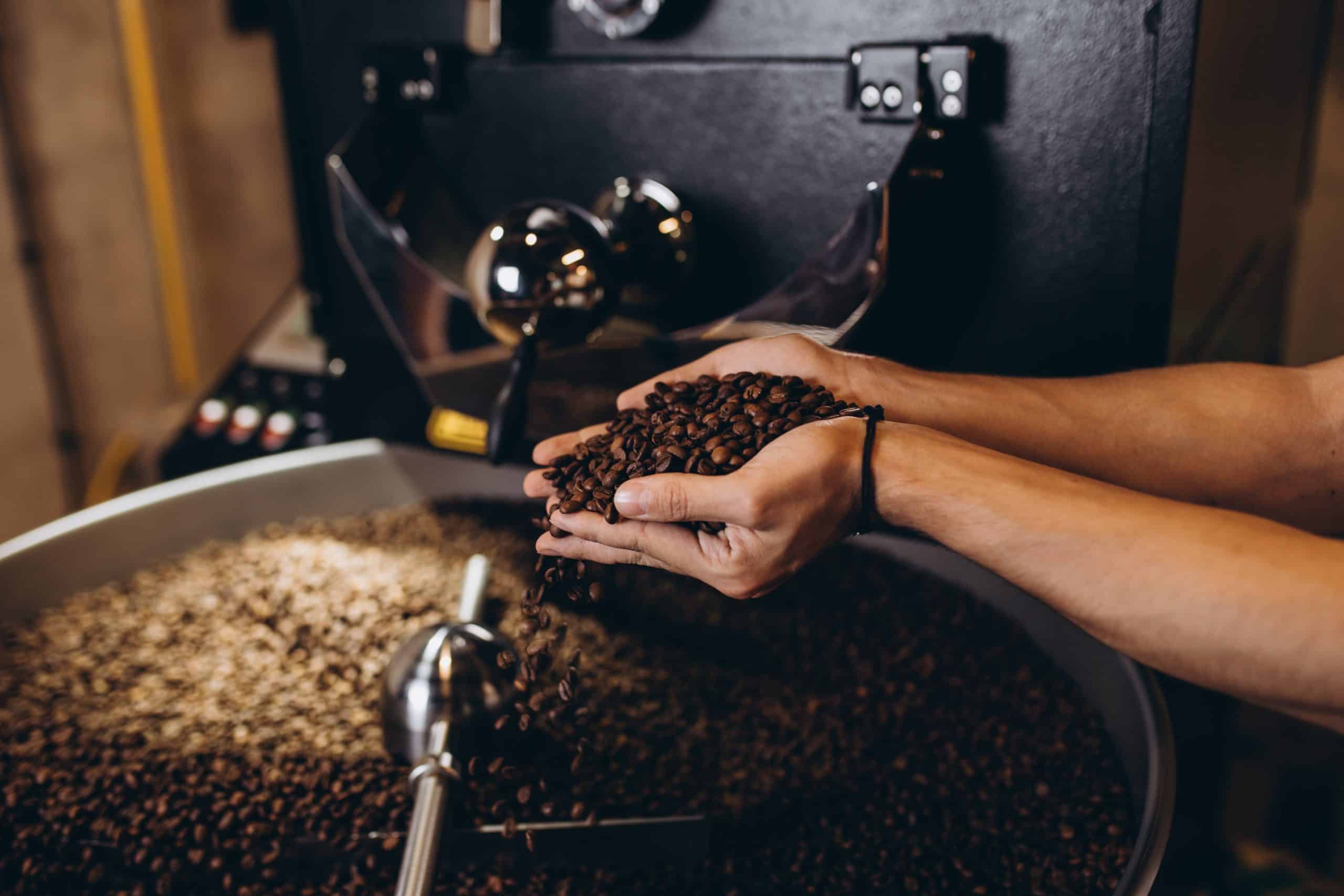
Two bags of the same coffee, roasted by the same roaster, on the same profile. One bag is two weeks old, the other is six weeks old. Pulled side by side, they taste different — not slightly, not subtly, but noticeably. The older shot is flatter, the crema is thinner, the finish is shorter. Nothing is wrong with the older bag. It has just aged. Here is the science of why, and what to do about it.
What happens during roasting
When green coffee meets heat, three processes happen simultaneously: water boils off, cell walls break down, and a cascade of chemical reactions creates new compounds. The most famous of these are the Maillard reactions, where amino acids and sugars combine to produce hundreds of aromatic molecules. Caramelisation begins. Carbon dioxide is generated as a by-product of these reactions and accumulates inside the bean’s porous structure.
By the time the roast is complete, a coffee bean contains:
- Hundreds of volatile aromatic compounds, many highly reactive
- Trapped carbon dioxide, in significant quantities
- Oils on or near the surface, depending on roast level
- A porous, fragile internal structure
The flavours you taste in a cup of coffee come from those aromatic compounds. The crema in your espresso shot is largely produced by the trapped CO2 being released under pressure. Everything that makes fresh coffee taste like fresh coffee is in there.
The first 48 hours — too fresh
Coffee straight off the roaster is, counterintuitively, not at its best. The CO2 levels are still very high. In espresso this manifests as a «wild» shot — uneven extraction, a foamy thick crema that lacks body, sometimes a slight sourness because the CO2 is interfering with even water flow through the puck.
This is why most specialty roasters recommend resting roasted coffee for a minimum of 5 to 7 days before using it for espresso, and 2 to 4 days for filter. The resting period allows CO2 to off-gas to a level where the coffee can extract evenly.
The 7-to-21 day sweet spot
Between roughly one and three weeks post-roast, coffee is at its peak. CO2 levels have dropped to a usable range. Aromatic compounds have not yet substantially degraded. Oils have not yet migrated significantly to the surface. This is the window where the coffee will taste closest to the roaster’s intent — the profile they developed when sampling and cupping.
For your café, this means the timing between when you receive a bag and when you put it on the bar matters. A bag that sat for a week in transit and another week in your storage before going on the bar is already mid-window. Pushing through stock so the bag goes on within a few days of arrival keeps you firmly in the sweet spot.
After 21 days — the slow decline
After three weeks, coffee starts to drift. The aromatic compounds responsible for the brightest, most distinctive flavours — the floral notes in an Ethiopian, the citrus in a Kenyan — are the first to fade. The cup starts to taste flatter. By six weeks, even a customer not trained to notice will sense the difference.
Two other things happen. CO2 levels continue to drop, so crema thins. Oils begin to migrate to the surface and oxidise, particularly in darker roasts; this produces stale, papery notes that get more pronounced over time.
What the bag valve actually does
You will have noticed the one-way valve on roasted coffee bags. Its job is to let CO2 escape (preventing the bag from rupturing) while preventing oxygen from entering (which would dramatically accelerate staling). A well-designed valve and bag combination extends the practical shelf life of roasted coffee from a few weeks to a few months.
Critically, that is the shelf life of an unopened bag. Once you open the bag, oxygen is in. From that moment, you have days, not weeks, before flavour starts to drop noticeably. This is why the hopper management of your grinder matters — beans sitting in an open hopper are degrading.
How to use this knowledge in your café
Five practical applications:
1. Buy fresh, store sealed, open recently. Order from a roaster who roasts to order, not from a roaster who keeps weeks of inventory. The age of the bag when you receive it matters more than any other factor.
2. Cycle stock through correctly. First in, first out, every time. Mark roast dates on bags as you receive them.
3. Refill grinders little and often. A hopper half-full of beans degrading for a service is worse than refilling every hour with smaller amounts.
4. Single-dose where it matters. For your most distinctive single-origin filter offering, consider single-dose brewing — weighing each dose immediately before grinding. The flavour difference is detectable, especially after the second cup.
5. Calibrate by the week. Your espresso recipe will need slight adjustments as a bag ages. Most roasters expect a small grind-coarseness change between week 1 and week 3 of a bag. Train your team to recognise this and adjust.
Closing thought
Fresh roast is not a marketing phrase. It is a chemical and physical reality. Treating freshness as a deliberate variable in your café — managed actively rather than left to chance — is one of the highest-impact, lowest-cost ways to lift the quality of every cup you serve.
Read more on coffee science weekly. Subscribe to the Good Cherry newsletter.